

Introduction
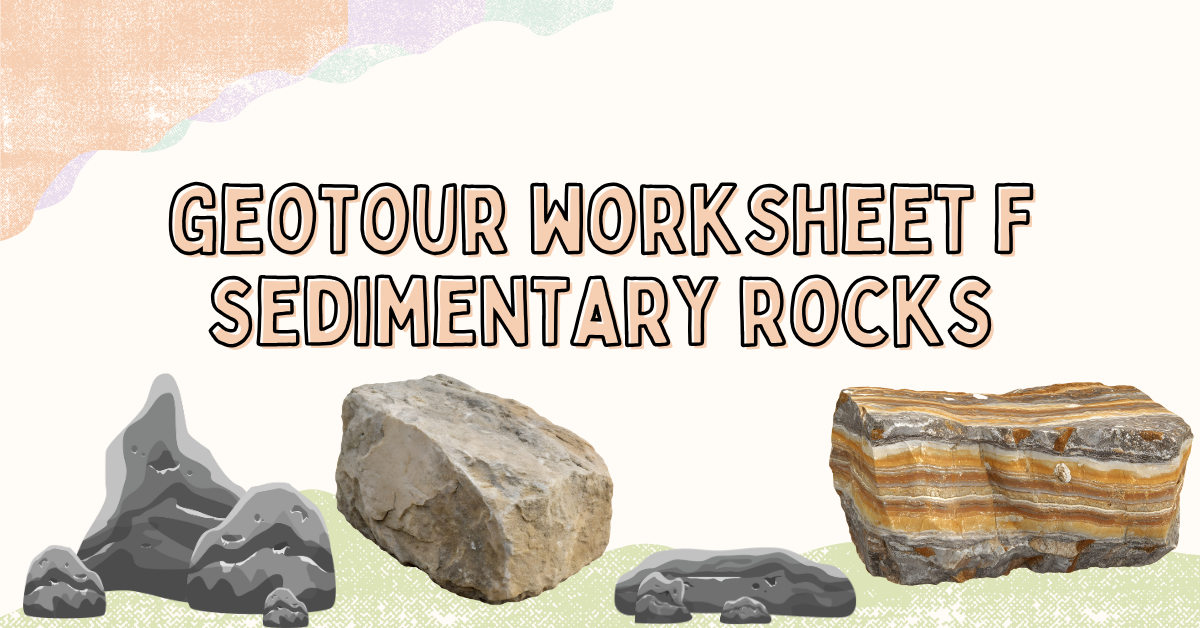
The geotour worksheet f sedimentary rocks is an engaging learning resource that helps students and geology enthusiasts explore the fascinating world of sedimentary rocks. These rocks are formed over millions of years from the accumulation of sediments—tiny fragments of other rocks, minerals, and organic materials. The worksheet acts as a guide, leading learners through hands-on exercises that reveal how these rocks are created, identified, and studied in the field.
What Are Sedimentary Rocks?
Sedimentary rocks are among the three main types of rocks found on Earth, the other two being igneous and metamorphic. They form when layers of sediments build up over time and harden through processes like compaction and cementation. Examples include sandstone, limestone, and shale. Each layer of these rocks tells a unique story about Earth’s past, such as ancient rivers, deserts, or oceans that once covered the land.
Why the Worksheet Matters
The geotour worksheet f sedimentary rocks encourages learners to look beyond textbook definitions and explore real geological features. By studying photographs, maps, and diagrams, students learn to recognize patterns and structures that define sedimentary rocks. Teachers often use this worksheet to make geology more interactive, giving students the feeling of being on a “geotour” — a virtual field trip across some of the most beautiful rock formations in the world.
Bringing Learning to Life
One of the best features of this worksheet is its use of real-world examples. Students can explore places like the Grand Canyon or coastal cliffs where millions of years of geological history are exposed in colorful rock layers. The worksheet helps identify important features like bedding planes, fossils, ripple marks, and cross-bedding — all of which provide clues about how and where the rocks formed.
The Formation Process
To understand sedimentary rocks, it’s important to know how they form. First, weathering and erosion break down existing rocks into smaller pieces. These sediments are then transported by wind, water, or ice and eventually settle in layers. Over time, pressure from additional layers causes compaction, and minerals within the sediments act as natural cement, binding everything together. The end result is a solid rock that preserves traces of its journey.
Exploring with Visual Tools
Many versions of the geotour worksheet f sedimentary rocks are paired with digital tools like Google Earth, allowing students to zoom in on real geological sites. This not only enhances visual learning but also makes the process more enjoyable. Instead of reading dry descriptions, students can observe real cliffs, valleys, and riverbeds — understanding how natural forces shape them over time.
Learning Through Discovery
During one classroom activity, students used the worksheet to study rock layers in photographs of the Grand Canyon. By observing the color and thickness of each layer, they could infer the type of environment that created it — whether it was formed under a shallow sea, a desert dune, or a river floodplain. This hands-on approach helps connect theory with real-world evidence.
Fossils and Clues from the Past
Sedimentary rocks are also famous for containing fossils. The geotour worksheet f sedimentary rocks often includes sections that teach students how to identify fossils and understand their importance. Fossils help scientists determine the age of rock layers and reconstruct ancient ecosystems. Through careful observation, students can learn how life on Earth has evolved over time.
How to Use the Worksheet Effectively
To get the most from this worksheet, learners should follow a step-by-step approach:
- Observe the given images and maps carefully.
- Identify key features like grain size, color, and layering.
- Make notes on possible depositional environments (river, desert, or ocean).
- Discuss observations with classmates or teachers to develop conclusions.
This structured approach helps build both knowledge and critical thinking skills.
Environmental Insights
Beyond classroom learning, sedimentary rocks also teach us valuable environmental lessons. They record climate changes, sea-level shifts, and natural disasters from millions of years ago. By studying these rocks, scientists can predict future geological patterns and better understand the planet’s ongoing changes.
A Personal Reflection
During a geology field trip, I once used a version of this worksheet while standing at the edge of a canyon. Each colorful layer told a different story — one represented an ancient sea, another showed evidence of desert winds, and yet another held fossils of small marine creatures. It felt like looking into Earth’s memory. The worksheet guided my observations, turning what could have been a simple sightseeing moment into a powerful learning experience.
Connecting Science with Curiosity
The geotour worksheet f sedimentary rocks encourages curiosity. It doesn’t just present facts; it invites questions. Why do some layers have fossils while others don’t? What does the grain size tell us about the environment? Why are some layers thicker or darker than others? These questions help learners think like geologists and develop a deeper appreciation for the planet’s history.
Technology in Geology
The combination of interactive worksheets and technology makes geology more accessible than ever. By using tools like virtual maps, digital overlays, and real-time data, even young students can explore Earth’s layers without leaving their classroom. This kind of learning builds awareness and passion for environmental science.
Practical Applications
Understanding sedimentary rocks isn’t just for scientists. It plays a big role in industries like oil exploration, water management, and construction. Sedimentary basins often contain natural resources such as groundwater, coal, and petroleum. The worksheet helps introduce these real-world applications in a simplified way, showing how geology connects to daily life.
Conclusion About geotour worksheet f sedimentary rocks
The geotour worksheet f sedimentary rocks is more than just a study tool—it’s a gateway to discovery. By guiding students through the visual and analytical study of sedimentary formations, it transforms geology from a static subject into an active adventure. Whether used in a classroom or on a field trip, it encourages learners to observe, question, and appreciate the ancient stories written in the Earth’s crust.
FAQs About geotour worksheet f sedimentary rocks
1. What is the purpose of the geotour worksheet f sedimentary rocks?
It helps students explore, identify, and interpret sedimentary rocks through interactive visuals and real-world examples.
2. Can beginners use this geotour worksheet f sedimentary rocks?
Yes. It’s simple enough for beginners yet detailed enough for advanced learners.
3. Why are geotour worksheet f sedimentary rocks important?
They preserve records of Earth’s history, including fossils and past environments.
4. How does technology help in using this worksheet?
Digital maps and satellite images allow learners to study real geological sites virtually.
